


“Access to myopia control and treatment options shouldn’t depend on a patient’s ZIP Code,” said Dr. Molly King, OD, FAAO, in her presentation at the 2026 meeting of the American Academy of Optometry. But, Dr. King explained, geography does have an impact on care. She pointed out that approximately 24% of counties in the United States have no eyecare providers1, and rural counties had 2.47 times the odds of being in the worst quartile for eyecare accessibility compared with non-rural counties, after adjusting for other sociodemographic factors.2 She also noted that by 2035, non-metro areas are projected to have only 29% workforce adequacy for eye care (compared with 77% in metro areas)—meaning demand will far exceed supply.3
Dr. King then discussed the benefits and challenges of remote optometry.
The Benefits of Remote Optometry
Reduced Wait Times
Dr. King gave an example of how reduced wait times to see a provider impacted the LA County Department of Health, where diabetic retinopathy screening exams averaged 8 months or more.4 After implementing teleretinal exams, the median time to screening dropped from 158 days to 17 days—an 89.2% reduction. “This eliminated the need for more than 14,000 specialty care visits by identifying 68.8% of screened patients who did not need to be referred,” she explained.
Increased Exam Availability
Another example Dr. King highlighted was the Atlanta VA's TECS program, which stationed trained ophthalmology technicians in primary care clinics to collect comprehensive eye data for remote interpretation.5 Over 13 months serving 2,690 patients, 99% of patients were seen within 14 days of contacting the eye clinic. The program reduced patient time by 25% and physician time by 50%, while maintaining at least 90% agreement between telemedicine reads and face-to-face physician findings. The no-show rate was only 5.2%, and patient satisfaction was 4.95 out of 5.5
“Remote optometry isn’t about replacing the eye examination. It’s about matching the right patient with the right technology at the right time and making sure optometrists, rather than technology or business interests alone, define what good care looks like,” said Dr. King.
The Challenges of Remote Optometry
The Need for Closed-Loop Referral Systems
Dr. King pointed out that while remote care increases the number of patients being seen and screened, the downstream completion of subsequent referrals remains a persistent weakness. “Remote care requires an additional handoff step; completion rates improve substantially when programs add navigators, integrated scheduling, and reminders rather than relying on the technician alone,” she said.
Dr. King added that referral isn’t the end of the clinical responsibility. “The question is whether the patient actually gets to where we sent them. Remote care needs closed-loop referral systems, not referral letters disappearing into the void,” she explained.
Another challenge, according to Dr. King, is ongoing tension between remote providers and onsite colleagues—both optometrists and ophthalmologists—some of whom have declined to accept referrals from remote exams, which she said ultimately affects patient care. Dr. King pointed out that both sides have legitimate frustrations. “Remote providers need to make appropriate referrals, and specialty colleagues need to remain accessible when patients have legitimate, time-sensitive disease,” she explained. “We need to reduce that friction because the patient ultimately pays the price when professional tensions interfere with continuity of care.”
Best Practices for Remote Optometry
-
Identify appropriate patients and visit types. Not every exam is a good fit for a remote platform. "A remote platform should never force a patient into an examination modality that isn't clinically appropriate," Dr. King said, pointing to binocular vision cases, low vision refractions, pediatric patients, and patients presenting with medical complaints as examples where in-person care is often the better option.
-
Standardize clinical protocols and referral pathways. No two remote platforms operate the same way today, which creates inconsistent experiences for both patients and providers. Dr. King said she advocates for an optometrist-led standard of care that works across different platforms, rather than each company setting its own bar.
-
Support remote optometrists clinically and professionally. Remote providers benefit from real-time access to colleagues for second opinions and complex case discussions, Dr. King noted. She added that the field currently lacks remote-specific continuing education, and that employers should both invest in that training and protect clinical autonomy as remote programs continue to scale.
-
Measure quality beyond volume-based metrics. When every part of an exam can be tracked, Dr. King warned, what's easy to measure—minutes per exam, patients per hour—can start to matter more than what's harder to measure, like clinical judgment and patient satisfaction. "We have to ask whether those incentives remain aligned with the quality of care we say we value," she said.
-
Conduct frequent and consistent technician and onsite staff training. Dr. King emphasized that this training should be optometrist-led, not passed down through multiple layers of non-clinical staff. "Otherwise, it's like a game of telephone," she said, noting that the reasoning behind each test can get lost by the time it reaches the technician performing it.
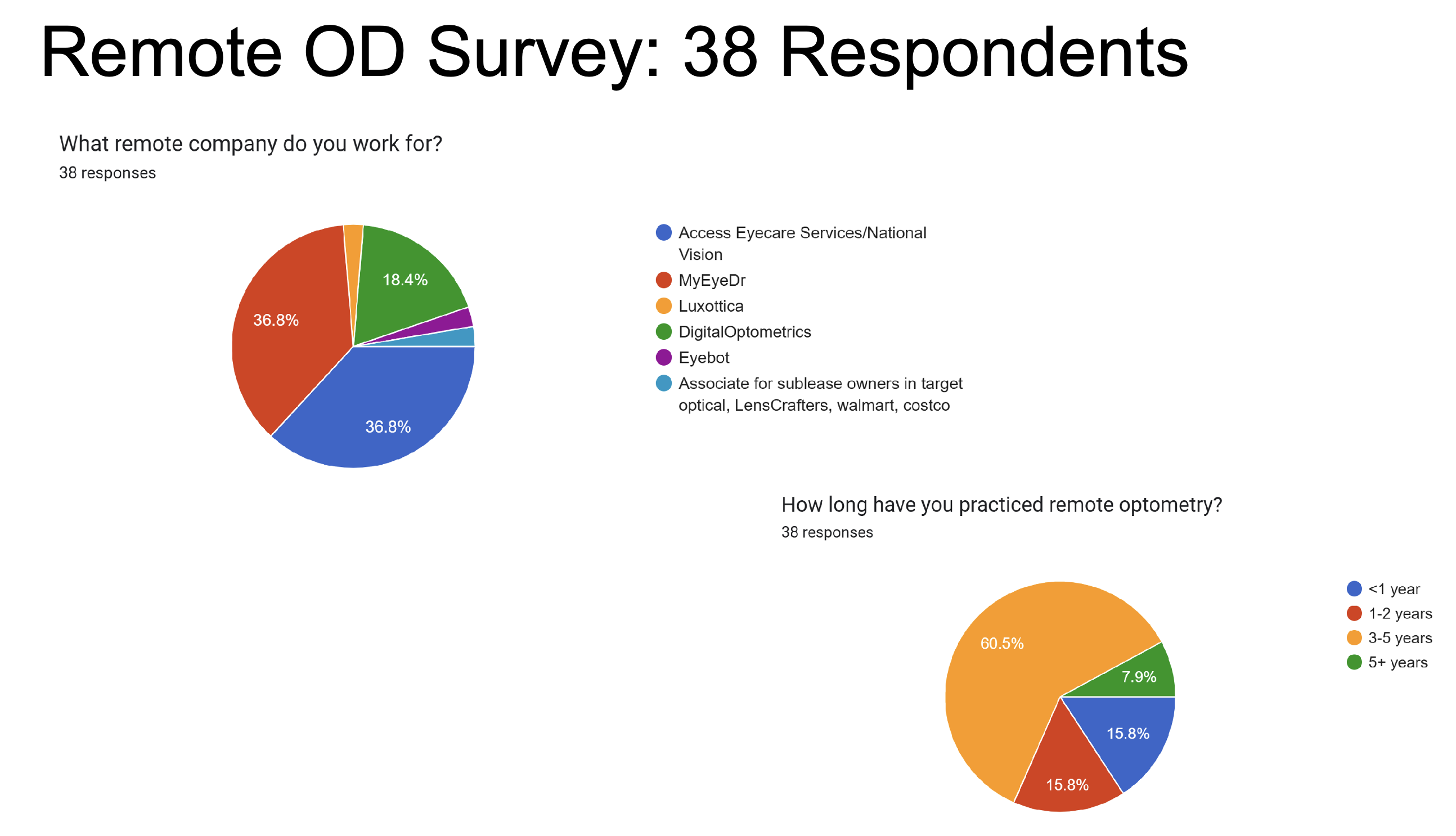
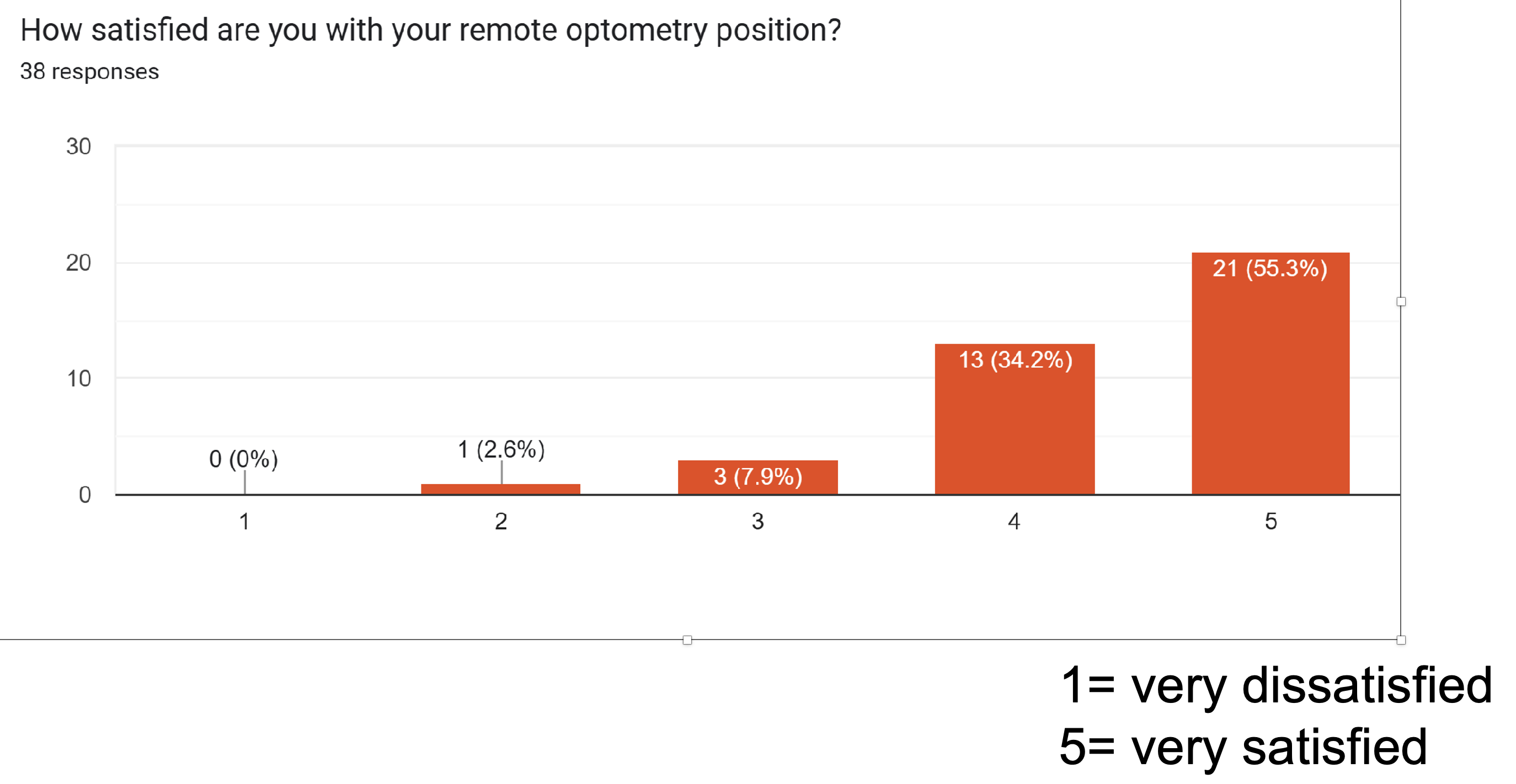
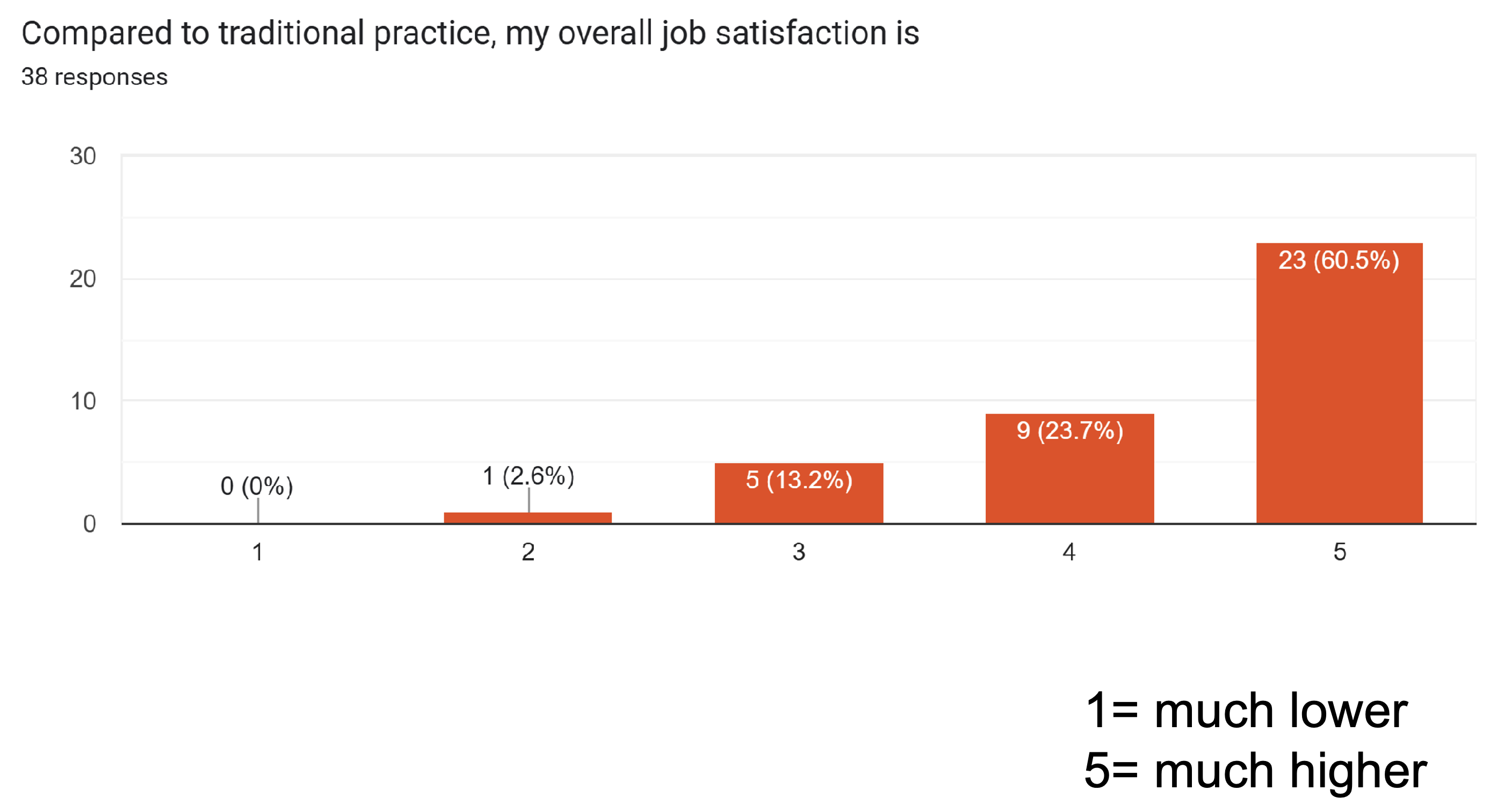
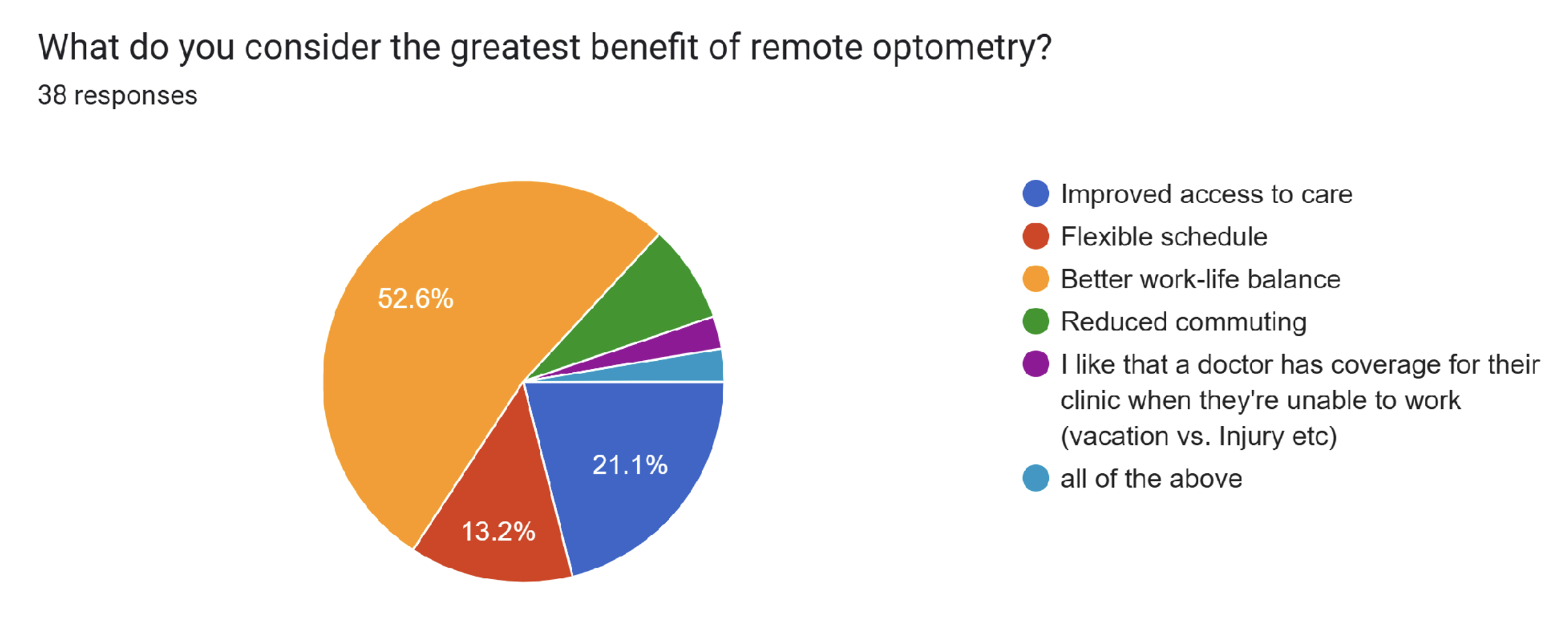
Dr. King also presented data from a small convenience sample of 38 remote optometrists to understand what they are experiencing. What follows are those findings:
References
1. Gibson DM. The geographic distribution of eye care providers in the United States: implications for a national strategy to improve vision health. Prev Med. 2015;73:30-36. doi:10.1016/j.ypmed.2015.01.008
2. Soares RR, Mokhashi N, Sharpe J, et al. Patient accessibility to eye care in the United States. Ophthalmology. 2023;130(4):354-360. doi:10.1016/j.ophtha.2022.11.017
3. Berkowitz ST, Finn AP, Parikh R, Kuriyan AE, Patel S. Ophthalmology workforce projections in the United States, 2020 to 2035. Ophthalmology. 2024;131(2):133-139. doi:10.1016/j.ophtha.2023.09.018
4. Daskivich LP, Vasquez C, Martinez C Jr, Tseng CH, Mangione CM. Implementation and evaluation of a large-scale teleretinal diabetic retinopathy screening program in the Los Angeles County Department of Health Services. JAMA Intern Med. 2017;177(5):642-649. doi:10.1001/jamainternmed.2017.0204
5. Maa AY, Wojciechowski B, Hunt KJ, et al. Early experience with Technology-Based Eye Care Services (TECS): a novel ophthalmologic telemedicine initiative. Ophthalmology. 2017;124(4):539-546. doi:10.1016/j.ophtha.2016.11.037