
I used to think ocular rosacea was primarily about treating what I could see. I looked for the familiar signs: lid-margin telangiectasia, meibomian gland dysfunction, tear-film instability, facial redness, and sometimes the papules and pustules we associate with rosacea. I treated the inflammation, addressed the glands, managed the dry eye, and educated the patient about the chronic nature of the condition.
None of that was wrong, and those things remain an important part of treatment. What has changed is the conversation I have with patients. I've learned that sometimes the most useful thing I can do after making the diagnosis is stop talking long enough to ask a few more questions.
Rosacea has triggers, but those triggers aren't necessarily the same for every patient. Helping someone recognize their own pattern may be just as important to long-term management as giving them a list of things to avoid.
A Patient Who Sounds Familiar
Consider a 41-year-old woman who presents complaining that her eyes feel particularly dry when she wakes in the morning. During the examination, I notice small areas of facial redness, scattered papules across her cheeks, and visible telangiectatic vessels. Her lid findings and ocular surface are also consistent with ocular rosacea.
As we talk, other pieces of her story emerge. She enjoys a glass of wine most evenings to decompress after the day and laughingly admits that chocolate is her weakness. She has gained some weight over the last several years and recently has been waking around 3 AM with night sweats. She wonders if she's beginning the transition into menopause.
It's tempting to start connecting all those dots for her, but that isn't the point. I don't know that her wine is contributing to her rosacea; I don't know whether chocolate affects her at all, and her night sweats deserve appropriate evaluation rather than an assumption about their cause.
What those details give me are better questions, and that's an important distinction.
Looking Beyond "You Have Dry Eye"
Ocular rosacea is a chronic inflammatory condition that can affect the eyelids, meibomian glands, tear film, conjunctiva, and cornea. For many patients, however, the only thing they know is that their eyes feel dry, irritated, gritty, or intermittently red. They may have gone through bottle after bottle of artificial tears without ever understanding why the symptoms keep returning.
This is where our technology can become an educational tool rather than simply a diagnostic one.
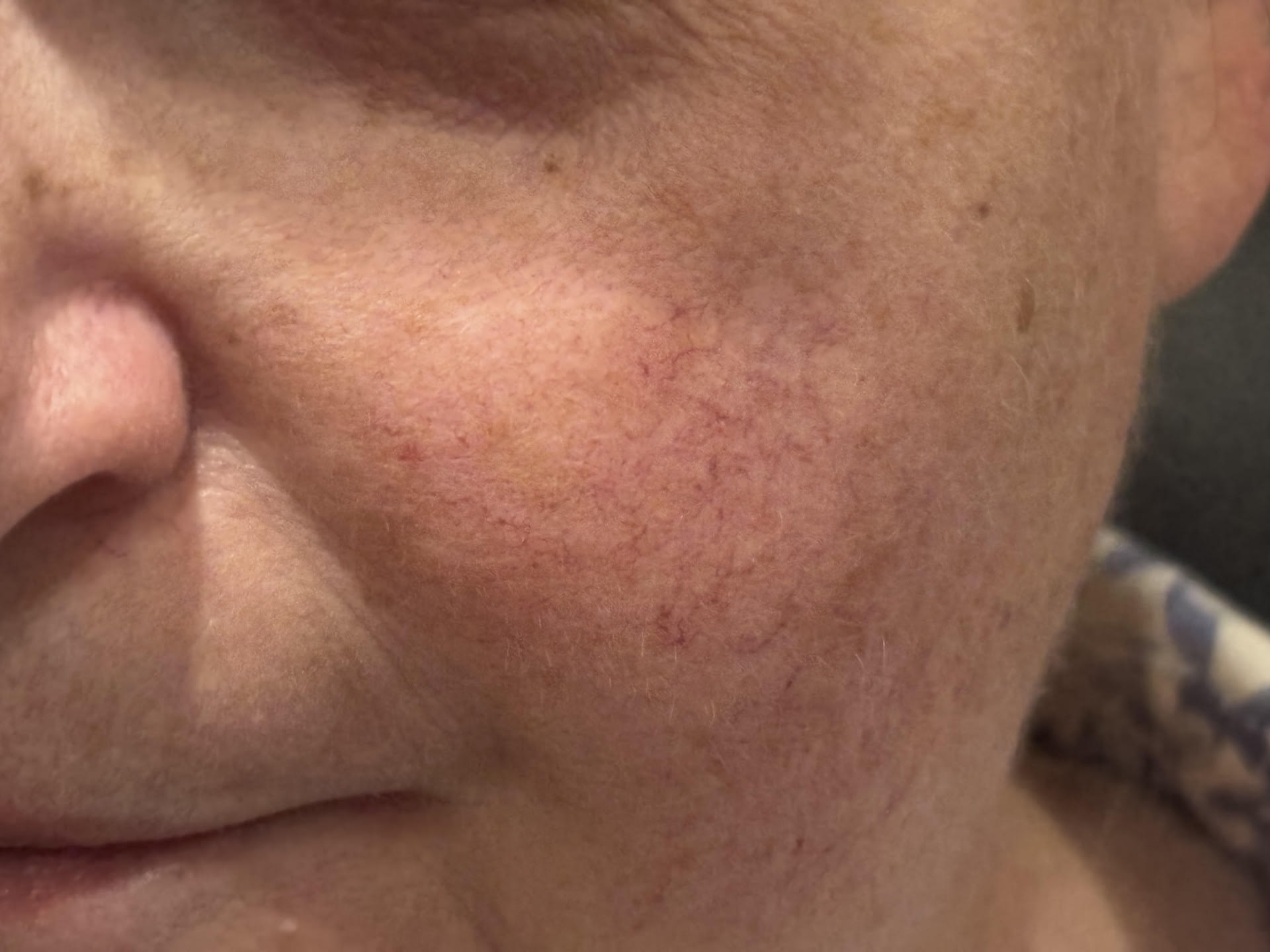
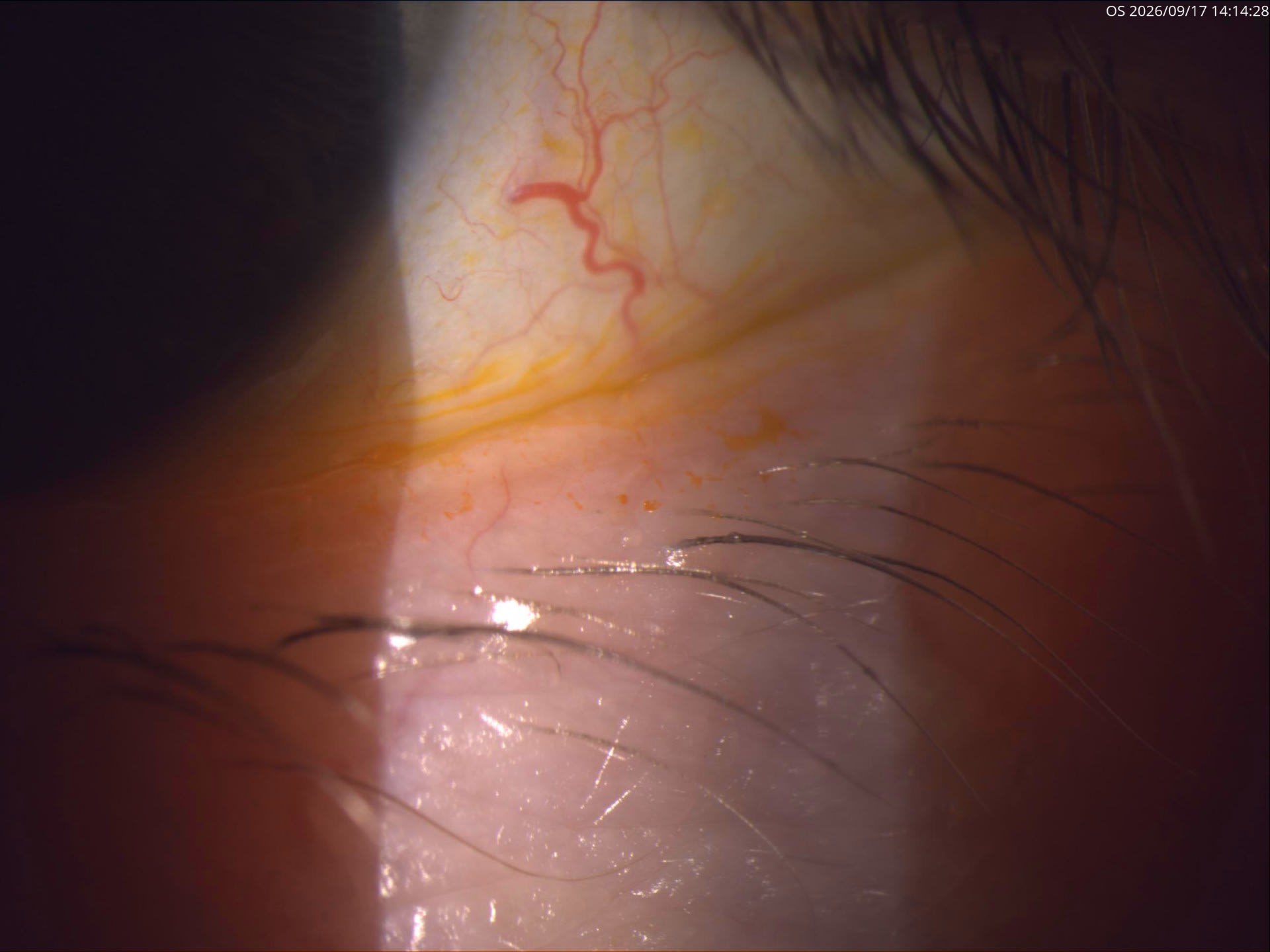
I might turn the screen toward the patient and say, "I want to show you what I'm seeing. Do you see these tiny blood vessels along the eyelid margin? Now look at the redness and small vessels across your cheeks. Your dry eye may actually be part of a larger inflammatory condition called rosacea."
Now the patient understands that the artificial tears sitting in her purse may be treating a symptom without addressing the entire picture. That's when the more important conversation can begin.
From Giving a Trigger List to Asking Better Questions
We've known for years that certain factors can trigger rosacea flares. Alcohol, heat, ultraviolet exposure, emotional stress, spicy foods, temperature changes, and other environmental or dietary factors are commonly reported. Yet giving every patient the same long list of potential triggers can quickly become overwhelming, and it may not tell us what actually matters to the person sitting in front of us.
Instead, I might ask, "Have you ever noticed that your face or eyes seem worse after consuming certain foods or drinks?"
For this particular patient, I might follow up with, "You've mentioned that you enjoy a glass of wine in the evening. Have you ever noticed whether you flush more afterward or whether your eyes feel different the next morning?"
Her answer may be yes or it may be no. Both answers are useful.
I can ask the same thing about chocolate without declaring chocolate the enemy. I can ask whether the nights she wakes hot and sweating seem to correlate with increased facial flushing. We can talk about stress, sun exposure, exercise, sleep, and anything else she has noticed. Suddenly, I'm not giving her another generic rosacea handout. We're investigating her disease together.
Know Your Pattern
This is the piece of patient education I think we sometimes miss. Rather than beginning with an elimination diet or handing the patient an exhaustive list of foods to avoid, start with observation. For a few weeks, ask the patient to keep a simple record of her ocular symptoms, facial flushing, papules, food and beverages, alcohol consumption, sleep, stress, heat and sun exposure, exercise, and treatment consistency.
We're not asking patients to obsess over everything they eat or every symptom they experience. We're asking them to become curious.
If nothing happens every time this patient eats chocolate, chocolate may not deserve another thought. If she repeatedly notices that her facial flushing increases after wine and her eyes are significantly more irritated the following morning, that’s a pattern worth exploring.
At that point, rather than eliminating 10 different foods at once, we can discuss temporarily removing 1 suspected trigger and observing what happens. If appropriate, reintroducing it later may help determine whether the association is reproducible. That approach gives us information while avoiding unnecessary restriction and, more importantly, teaches the patient something they can use long after they leave our office.
Treat the Disease, But Teach the Patient
None of this replaces appropriate medical management. Depending on the clinical presentation, ocular rosacea treatment may include lid hygiene, thermal therapy, lubrication, treatment of meibomian gland dysfunction, prescription anti-inflammatory therapy, or coordination with dermatology and primary care. Patient education should complement evidence-based treatment, not compete with it.
What has changed for me is recognizing that prescribing treatment and teaching patients how to understand their disease are 2 different responsibilities, but we can do both. When patients understand why we're recommending something, they're more likely to recognize what we're trying to accomplish. When they begin identifying their own patterns, they also become active participants in the process rather than passive recipients of another treatment plan.
The Prevention Prescription
Today's Conversation
"Rosacea is an inflammatory condition, and everyone's triggers can be a little different. Instead of giving you a long list of things you can't eat or drink, I'd like us to figure out what seems to affect you. For the next few weeks, pay attention to when your skin and eyes feel their best and when they flare. Then we'll look at those patterns together."
Today's Teaching Point
Treating inflammation is important, but helping patients understand what may be driving their individual flares gives them a meaningful role in managing their disease.
Know Your Pattern
Encourage the patient to keep a simple journal for several weeks and look for relationships between symptoms and the following factors:
-
Food and beverages, including alcohol
-
Stress
-
Sleep
-
Heat and sun exposure
-
Exercise
-
Hormonal changes or episodes of flushing
-
Treatment consistency
The purpose isn't to eliminate everything that might be a trigger. It's to identify what appears to matter for this patient. If a consistent pattern emerges, consider changing 1 variable at a time and observing the response.
One Goal Before Your Next Visit
Choose 1 thing to observe or change before the next appointment.
For this patient, it might be tracking whether her nightly glass of wine is associated with increased facial flushing or worse morning dry eye symptoms. For another patient, the meaningful pattern may be completely different.
The goal isn't perfection. The goal is understanding. When patients begin to understand their own patterns, they become partners in managing their disease, not simply recipients of another treatment plan.