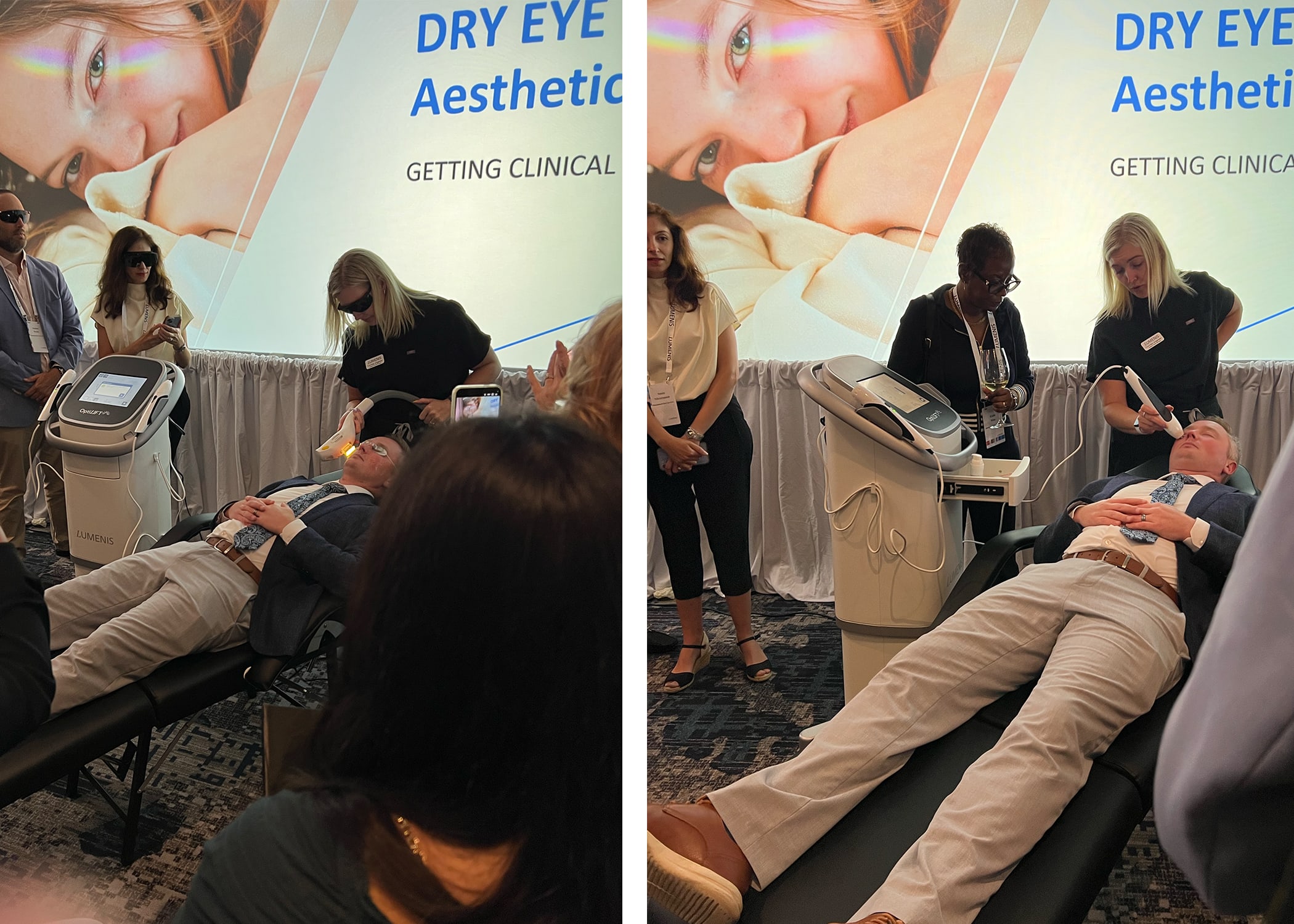

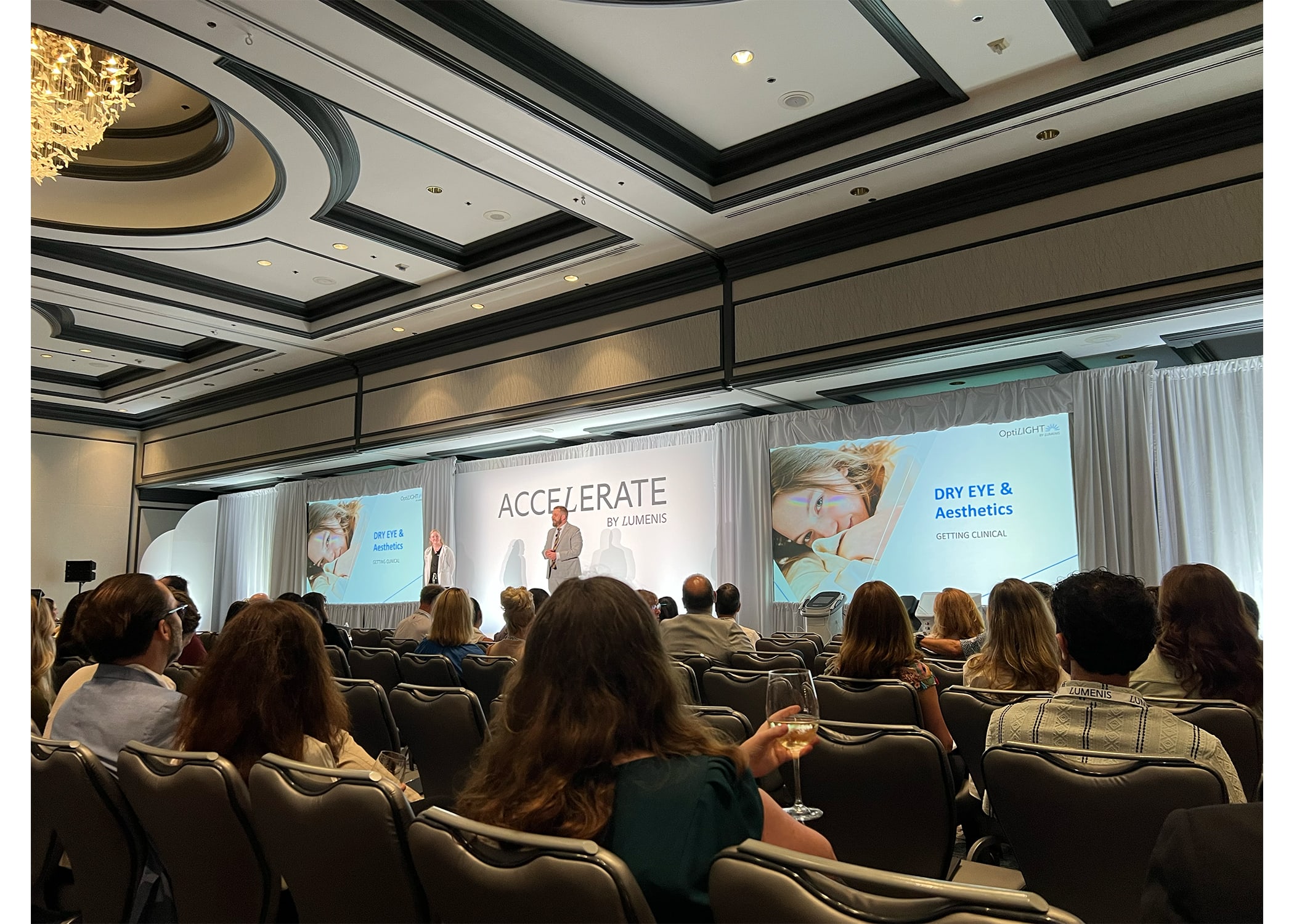
Lumenis opened its Accelerate Owner’s Summit in Chicago on August 27 with a review of applications for intense pulsed light (IPL) and dynamic muscle stimulation (DMSt) technology in dry eye disease, as well as a look at how optometrists can expand use of the technology into aesthetic procedures. The weekend program provided attendees with clinical education alongside marketing, business, financial, and return-on-investment guidance, while the opening session focused largely on IPL physics, dry eye protocols, and aesthetic applications of OptiLight both as a standalone treatment and in conjunction with OptiLift or TriLift.
For age spots and other aesthetic cases in which spot treatment would be needed, they suggested the 515 nm to 560 nm filters, which are more aggressive and concentrate heat on the epidermis. Wavelengths of 695 to 755 nm are less aggressive and are the “marathon filters,” the presenters added.
During the opening session, Hannah Pettit, Lumenis clinical trainer, and Bill Bickert, Lumenis director of medical education, reviewed how IPL interacts with different layers of the skin and emphasized the importance of understanding treatment depth and target chromophores when selecting filters for aesthetic applications. Unlike a laser, which uses a single wavelength, IPL delivers a broader spectrum of light that can target multiple chromophores, including pigmentation and vasculature, they explained.
The presenters also reviewed practical considerations for the OptiLight dry eye protocol. Among their recommendations were performing a Fitzpatrick skin assessment before treatment, using light contact with the handpiece without blanching the skin, maintaining approximately 10% to 20% overlap between pulses, and positioning the handpiece to maintain contact in narrower treatment areas. “Let the handpiece do the work for you,” Pettit told the audience. She also advised caution around eyelashes and other facial hair with IPL because it can act as laser hair removal.
More aggressive filters may be needed for ocular rosacea. However, Hannah Pettit stressed that all vascular lesions should be treated at baseline, rather than in any kind of flare up.
Patch testing gauges how the patient’s skin holds heat, the presenters described. For darker skin on the Fitzpatrick skin assessment, they recommended waiting 24 to 48 hours to continue with treatment after patch testing. They also stressed testing on skin that is a similar thickness as the skin with the lesion to ensure accuracy of the patch test.
The presenters discussed treatment of hyperpigmentation, telangiectasia, rosacea, and other conditions, and emphasized patch testing and appropriate filter selection. For aesthetic treatments, they recommended assessing both skin type and the characteristics of the targeted lesion before using the device’s preset starting parameters. For telangiectasia, the presenters discussed targeting the “feet” or the “roots” of the dilated blood vessels. Blanching or darkening of the vessels at first are indicative of successful endpoints to the treatment, they said. For patients with multiple treatment needs—such as inflammation, meibombian gland dysfunction, and lid laxity, the speakers discussed combining OptiLight with OptiLift for 4 total sessions every 2 weeks. They recommended performing OptiLight first when the treatments are delivered during the same visit, followed by OptiLift.
The opening program concluded with a live demonstration of the technologies, which set up additional clinical and practice-focused education scheduled throughout the summit.