


During practice management sessions at the Lumenis Accelerate Owner’s Summit in Chicago on August 28, speakers shared strategies for incorporating specialty dry eye care into both comprehensive and dry eye-focused practices, with particular attention to workflow, staff training, patient communication, and marketing.

One central recommendation in a presentation from Cory Lappin, OD, and Celesta Ferreira, OD, was to screen during the comprehensive examination but reserve diagnosis and treatment discussions for a dedicated dry eye visit. Rather than attempting to conduct a complete dry eye evaluation during an already time-constrained comprehensive examination, practices can use a questionnaire, imaging, or another quick screening method to identify patients who warrant further evaluation. Dr. Ferreira said her technicians perform noninvasive tear breakup time testing and meibography on every comprehensive examination patient—it takes approximately 90 seconds, she said.
When screening identifies a concern, she and Dr. Lappin recommended briefly explaining the finding and scheduling the patient for a dedicated medical evaluation. They compared the workflow with glaucoma care: An abnormal optic nerve finding during a comprehensive examination prompts a return visit for optical coherence tomography and visual field testing. Dry eye deserves the same approach, Dr. Lappin said. A separate appointment gives clinicians sufficient time to perform diagnostic testing, determine disease severity, educate the patient, and develop a treatment plan.
Using Visuals to Educate Patients
Drs. Ferreira and Lappin recommended showing patients their own clinical findings whenever possible rather than relying solely on verbal explanations. That does not necessarily require an extensive diagnostic platform, they said. Depending on the practice, clinicians could show meibography, corneal staining, lid laxity, rosacea, gland expression, or even a simple photograph or video that they capture during the examination.
Dr. Ferreira added that a dry eye coordinator on staff can reinforce the doctor’s recommendations. She suggested that the coordinator should restate what the physician prescribed and the condition being treated before moving into pricing and scheduling, however.
AI Optimization and Staff Training Insights
Julie Davis, founder of Pura Vida Body & Mind med spa and AesthetiEdge, added to the practice management conversation in a presentation on both staff training and what she called “AIO”, or the next step in SEO with artificial intelligence.
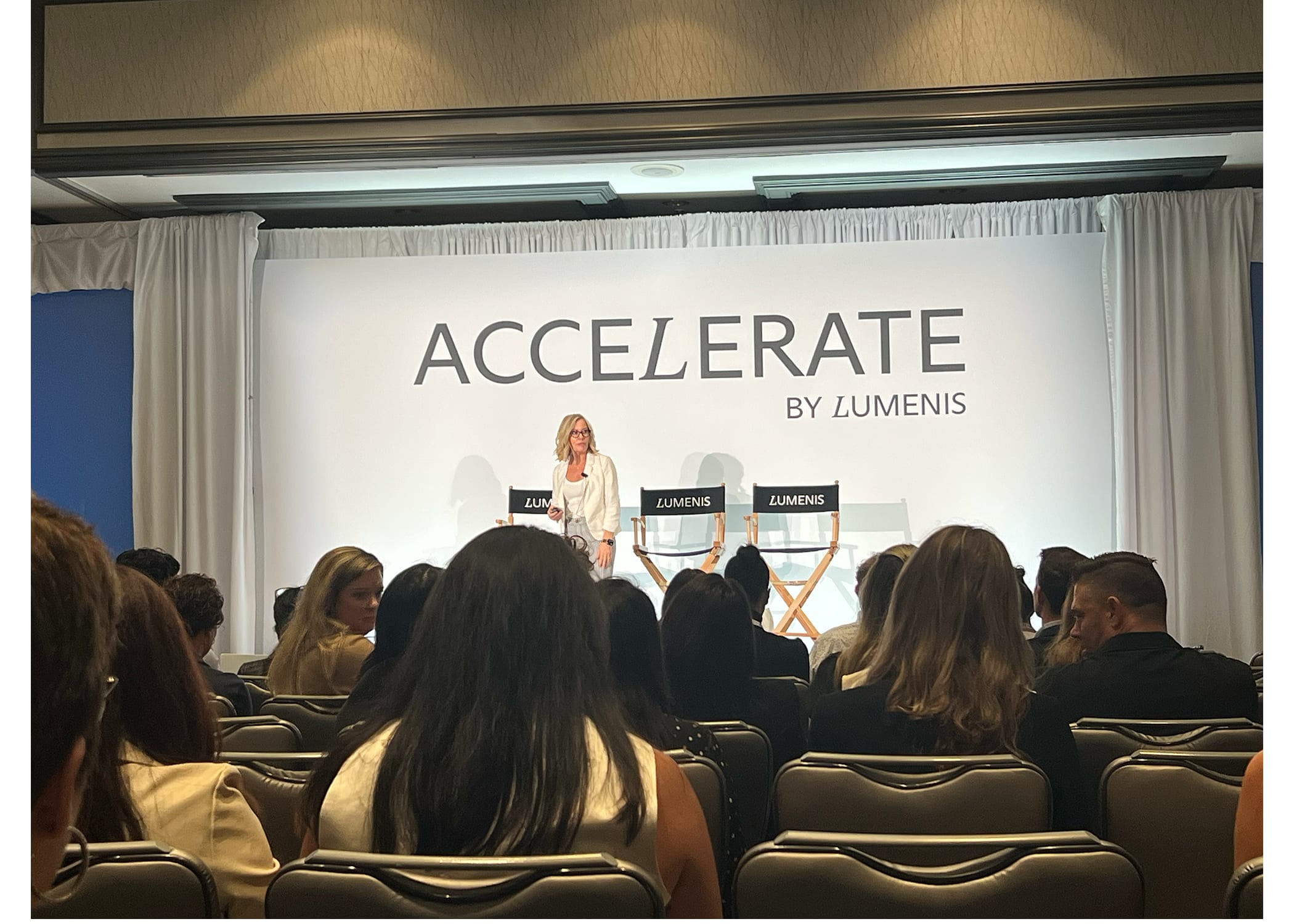
Julie Davis’ Recommendations for AI Optimization:
- Phrase services on your website in the way patients talk about them: ie, will it hurt? What’s the downtime?
- Include credentials in authorship on your practice’s blog to make your expertise and credibility clear, even if you use AI to help you write the content. Someone in your office should put their name and credentials to it, she said. If you use AI for content on your site, be sure to verify all claims, statistics, and medical information it provides.
- Check for broken links, check how pages and your site as a whole is performing, and keep it current, both in design and information.
Ensure that your ads are in compliance with social media’s rules:
- Avoid assuming or telling the viewer about themselves
- Do not imply that the person should feel bad about how they look
- Be careful with claims when showing before and after photos
- Don’t promise a specific outcome or result in a specific timeline
- Raise ad budgets slowly and incrementally
- Don’t hide when you’ve used AI to help you create an ad
Both an AI agent and a front desk agent get things wrong, she said. For example, an AI chat agent that’s available to potential patients after hours can lack warmth, empathy, and compassion when a person talks about their chief complaint. It may also present an overwhelming number of solutions before getting to the bottom of a chief complaint with discovery questions. Also important, Ms. Davis said, is getting the prospective patient’s name and contact information to not lose the lead if the person stops engaging with the chat.
The front desk, she added, is the most important position in a practice because it's the first contact a potential patient has with a practice. She described how this entry-level position can have high turnover and fall through the cracks with training. When she evaluated a front desk agent at her med spa and compared them with AI’s performance, she noticed that the front desk also didn’t dive deeper into discovery questions when a patient called in; the agent went straight into scheduling.
Ms. Davis then described several staff training and patient experience pearls. First, she said, set up a definitive framework for how new patients interact with the practice and have staff practice through roleplaying and scripts that become rote and natural through training. Next, be sure staff asks discovery questions before scheduling or discussing the price of a service, and always record the patient’s name and contact information.
Requesting to-do lists from AI with specific parameters such as patients who haven’t booked another appointment but are due for one can help practices stay on top of follow-ups, she said.
Don’t View Treatment Refusal as Failure
Once a patient is in the office for a full evaluation, Drs. Lappin and Ferreira said, don’t equate a patient's decision to decline treatment with failure. The clinician's responsibility, they said, is to diagnose the condition, explain the findings and treatment options, and allow the patient to decide how to proceed. When patients decline treatment, document that decision and establishan appropriate follow-up interval to be sure that the patient doesn’t disappear from the dry eye workflow.
Sometimes, they added, patients need time to process what they were told, think it over with a spouse, figure out finances, or many other reasons. It’s not always a “no”; it could be a “not right now.”
By taking the approaches mentioned, Dr. Ferreira said that her practice's treatment conversion rate increased over time from approximately 30% to between 67% and 75%. Importantly, she noted that those decisions do not necessarily occur during the initial appointment. Some patients proceed after additional conversations with a coordinator or at a follow-up visit 4 to 6 weeks later.
"Concentrate less on securing an immediate 'yes' and more on developing a consistent clinical process: Identify disease, give it adequate examination time, show patients what the clinician sees, explain the treatment rationale, and provide opportunities for continued discussion," Dr. Ferreira concluded.