

My patient smiled and said, “I’m fine, I’m just here to get more contacts.”
I knew it would take less than 10 seconds to renew her prescription. She had been wearing the same lenses for more than a decade, her vision was 20/20, the slit lamp findings were unremarkable, and she wasn’t asking for anything different.
It would have been easy, and perfectly justifiable, to click “renew” and move on to the next patient, but I asked, “When do you first become aware you’re wearing contact lenses?”
She paused. “Around lunchtime,” she said. Then she admitted, “But I keep rewetting drops in my purse. The only time it becomes a big issue is if I want to go out after work. Then I have to put in a new pair.” She thought this was normal.
That exam completely changed how I think about “successful” contact lens patients. I used to believe my easiest contact lens patients were my best ones. I now realize many of those patients represented my biggest missed opportunities, not because I fit them into the wrong lenses, but because I never gave them the opportunity to experience something better. When patients say, “Everything’s good,” we should pause because they often don’t mean their contact lenses are exceptional. They mean they stopped expecting them to be.
Some of our greatest opportunities are found in helping patients experience a level of comfort they didn’t know was possible. Therefore, the annual contact lens examination should not be a prescription renewal. It should be a technology review; that is, it should be a deliberate process of determining whether a patient’s current contact lens remains the best option available based on today’s technology, the patient’s lifestyle, and their clinical findings.
We Adapt Faster Than We Realize
Humans are remarkably good at adapting. We normalize inconvenience when it develops slowly enough. Someone who lives next to train tracks eventually stops hearing the trains. A person who upgrades from a flip phone to a smartphone quickly forgets what it was like to type with an alphanumeric keypad. Similarly, contact lens wearers often stop recognizing the small compromises they’ve been making over the years because those visual compromises become their new normal.
This phenomenon creates an important challenge for clinicians. If patients have normalized their symptoms, they won’t ask for something better. In fact, many believe they are good contact lens wearers because they have learned to manage the inconveniences successfully. This means waiting for patients to request new technology is often a losing strategy. They cannot ask for an improvement they no longer recognize they need or even know exists.
The literature supports this observation. Studies have shown that patients who switch from reusable lenses to daily disposables report significant improvements in comfort, along with a lower rate of superficial punctate keratitis.1,2 This demonstrates that many patients can benefit from newer technology even when they haven’t asked for a change.
Why We Leave Patients in Yesterday’s Technology
Most optometrists pride themselves on staying current. We attend continuing education meetings, read journals, and invest in new diagnostic technology because we believe our patients deserve the best care available. Despite that commitment though, far too many contact lens patients continue wearing technology that was prescribed years earlier because we don’t want to “fix” what’s not broken. One of the most common thoughts during a busy clinic day is, “They’re doing well. Why change it?” It’s an understandable mindset. If a patient sees well, doesn’t communicate complications, and isn’t asking for anything different, renewing the prescription feels efficient. But “working” and “exceptional” are not the same thing.
We cannot wait for patients to communicate issues to us. Despite what patients are telling us, poor lens care compliance is still very common. Although 86% of patients believe they are compliant with hygiene, only 34% truly demonstrate appropriate lens care practices when interviewed.3 This discrepancy between patient belief and behavior shows why “everything is fine” is a dangerous assumption that reinforces why renewing the same prescription isn’t always benign.
Some doctors also hesitate to recommend premium technology because they don’t want patients to think they’re upselling. That concern is understandable, especially at a time when patients are sensitive to increasing health care and living costs. Ironically though, withholding a recommendation can undermine the very trust we’re trying to protect. Patients don’t expect us to recommend the least expensive option. They expect us to recommend the option that we believe is best. They trust us to explain the benefits, discuss the trade-offs, and allow them to make an informed decision. When we choose not to present better technology because we assume they’ll say no, we’ve made the decision for them before they ever had the opportunity to make it for themselves.
We don’t hesitate to recommend a new progressive lens, a more effective glaucoma medication, or a more advanced dry eye treatment when we believe they offer a meaningful advantage. Contact lenses deserve that same standard. The most important mental shift is moving from asking “Does this patient need a different lens?” to asking “If I were fitting this patient for the first time today, would I choose the same lens?” If the answer is no, then the conversation about newer technology should be part of delivering contemporary clinical care.
Change the Conversation
If patients rarely recognize their own compromises and doctors often assume that “fine” means optimal, then we need to work at changing how we perform the annual contact lens evaluation. The goal is no longer to determine whether the patient can tolerate their contact lenses, but rather whether today’s technology can improve their experience.
It’s important to replace happiness questions with exploratory questions. Many of us routinely ask, “How are your contact lenses? Do you have any problems?” These questions aren’t wrong, but they seldom uncover meaningful opportunities for improvement. They invite short answers, and most patients respond exactly as we’d expect: “Everything’s fine.”
Instead, ask questions that encourage patients to reflect on their experience. For example, “If you could improve one thing about your contacts, what would it be?” Listen for what patients have accepted as being tolerable. They often reveal upgrade opportunities without realizing they’re doing so. They might say, “I’d like to be able to wear them while working on a computer.” This statement may not come across as a complaint but if we listen, it signals an opportunity to improve comfort and quality of vision.
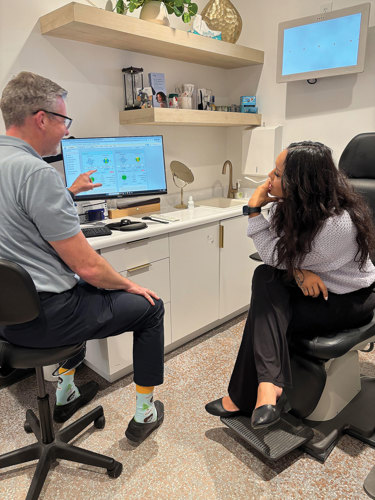
Get curious when a patient mentions a compromise and say, “Tell me more about that.” Patients frequently reveal details they didn’t intend to share. Many of these conversations can begin during pretesting before the doctor even enters the room. By the end of the history, we should have a clear understanding of where patients have adapted, what compromises they’ve accepted, and whether new technology could meaningfully improve their daily lives. The next step is matching those opportunities with the right technology.
Build a Technology Review Into Every Contact Lens Exam
One of the biggest mindset shifts we can make is to stop viewing annual contact lens examinations as prescription renewals. Instead, think of every visit as if the patient was being fit for contact lenses for the very first time. Ask yourself, “If this patient walked into my office today wearing no contact lenses, would I choose the same lens?” If the answer is yes, the patient can feel confident they are wearing technology that still aligns with your current clinical standards.
If the answer is no, you’ve identified an opportunity to offer a new technology. Further, patients assume we will tell them when meaningful advances occur. They may not realize today’s contact lenses may be dramatically different from the ones they were originally prescribed.
Materials evolve. Surface technologies improve. New replacement modalities emerge. Toric lenses become more stable. Multifocal optics become more successful. Myopia management options continue to expand. International guidelines have moved beyond simply offering myopia management as an option, and proactive myopia management is increasingly regarded as the standard of care.4 Myopia is mostly irreversible once developed, which means delaying its onset by just 1 year may have a greater lifetime benefit to patients than multiple years of progression control.5 Helping patients understand and benefit from emerging technologies is becoming an integral part of modern contact lens care.
Innovation shows no signs of slowing. Although smart contact lenses—which are capable of monitoring intraocular pressure, measuring tear biomarkers, or delivering medications—remain investigational, they remind us that contact lenses are evolving into sophisticated medical devices rather than simply tools to correct refractive errors. The pace of innovation makes regular technology reviews increasingly important not only for today’s advancements but also for those on the horizon.6-8
Possibly one of the greatest benefits of incorporating technology into every examination extends beyond the contact lens itself. Each recommendation demonstrates that your practice actively evaluates emerging technology instead of simply renewing prescriptions. Patients see that they are receiving individualized recommendations based on today’s evidence and that those recommendations evolve. Over time, this approach creates a reputation for innovation, reinforces your role as the clinical expert, and gives patients confidence that they are receiving the highest standard of care available.
Identifying Upgrade Opportunities
Reviewing new technology with a patient should be prompted by changes in their visual demand, lifestyle, or clinical findings. For example, presbyopia alone affects an estimated 1.8 billion people worldwide, and more than half of those patients have inadequate vision correction.3 An emerging presbyope who has just begun noticing subtle difficulties with their near vision may benefit from an early discussion about multifocal technology, when adaptation is often easier, rather than waiting until they become dependent on readers over their contact lenses.
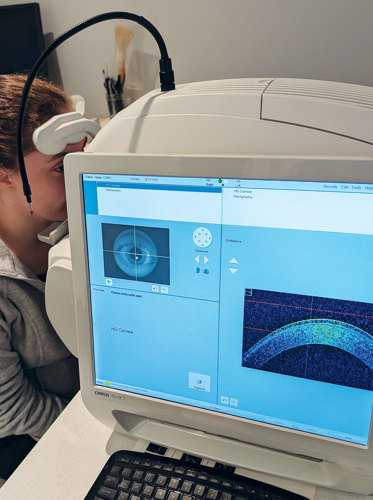
As another example, newer optical designs that improve visual quality could be helpful for patients who report glare or halos while driving at night, and those whose lenses consistently accumulate deposits may benefit from advances in surface technologies or a replacement schedule that is tailored to their tear chemistry. Daily disposable lenses also eliminate dependence on lens care compliance, which makes them an excellent option for patients whose lifestyle or habits make reusable lenses harder to maintain. For reusable lens wearers who remain good candidates, hydrogen peroxide disinfection solution may also improve safety by reducing risks associated with poor lens care.3
Lifestyle changes can also create opportunities for better lens recommendations. Patients who work in dusty or dirty environments may achieve healthier, more comfortable lens wear with a daily disposable. Other patients who are so busy with work that they routinely lose track of when to replace their lenses may benefit from a more intuitive replacement schedule, such as a weekly lens that they replace on the same day each week. Even patients who previously masked low amounts of astigmatism, because earlier toric lenses were uncomfortable or unstable, deserve a fresh conversation about today’s toric designs that have significantly improved in comfort, stability, and visual performance.
The goal is not to assume that every symptom can be solved by changing contact lens brands, but to recognize that each complaint creates an opportunity to re-evaluate whether the patient’s current lens remains your best recommendation.
Recommendations Build Trust
Once you’ve identified an opportunity to improve a patient’s contact lens experience, how you present that recommendation is just as important as the technology itself.
Many clinicians unintentionally weaken their recommendations by presenting them as optional upgrades rather than clinical prescriptions. Consider the difference between these scripts: “Would you like to try a newer contact lens?” vs “Based on your examination and what you’ve shared with me today, I recommend this new contact lens because this technology addresses exactly what you told me you’ve been experiencing.” The second statement reinforces that it is based on the patient’s individual needs and your clinical judgment and isn’t just a sales conversation. It gives the patient the reason behind the recommendation.
Patients are more likely to accept a recommendation when it is connected directly to something they shared during the examination, so be sure to explain how it addresses their concern, rather than only describing the features the new lens offers. For example, “You mentioned that your lenses become dry after working on the computer all day. This newer surface technology should help improve that comfort.” By linking the recommendation to the patient experience, the conversation naturally shifts from discussing products to improving quality of life.
Patients rarely question recommendations they understand. They appreciate knowing that there is something better available even if they ultimately decide not to pursue it. And again, by consistently introducing new technology, we demonstrate that our practice is committed to bringing patients the best options available.
Creating a Culture of Innovation
Successfully upgrading patients to newer contact lens technology only happens when the entire practice embraces innovation. When every team member understands that part of the annual contact lens evaluation is reviewing whether newer technology could benefit patients, these conversations become a routine part of care rather than an occasional recommendation.
Staff members play an important role in starting the conversation and reinforcing the doctor’s recommendations. Technicians can document changes in wearing habits, comfort, digital device use, and lifestyle before the practitioner even enters the room to provide valuable insight into potential upgrade opportunities. After the examination, optical staff can reinforce the benefits discussed by the doctor while answering questions about replacement schedules, annual supplies, and pricing. Patients gain confidence in the recommendation when the entire team delivers a consistent message.
Consistency also comes from building this technology review into your workflow. Simple prompts within the electronic health record, documenting the year a patient was fit into their current lens, or routinely asking a few standardized history questions in pretesting can ensure that every contact lens patient receives the same thoughtful evaluation. A systematic process removes the need to rely on memory and helps prevent opportunities from being overlooked during a busy clinic day.
Perhaps the greatest practice management benefit is the reputation this approach creates over time, as I mentioned earlier in this article. Patients begin to recognize that your practice continually evaluates new technology and recommends advancements that improve their vision, comfort, convenience, and ocular health. That commitment to innovation strengthens patients’ trust, differentiates your practice, and reinforces the value of annual comprehensive contact lens examinations.
Measuring Success
The success of incorporating technology reviews into every contact lens examination shouldn’t be measured solely by how many patients switch to a new lens. It should be measured by how many patients leave your office with a better solution than the one with which they arrived. Are your patients experiencing better outcomes? Is your practice consistently identifying opportunities that may have been previously overlooked?
Clinically, success may be reflected by improvements in:
- longer comfortable wearing times
- fewer reports of end-of-day dryness
- improved visual quality
- fewer replacement schedule issues
- healthier ocular surfaces
Patients who previously accepted compromise may now report that they no longer think about their contact lenses throughout the day. That’s a simple but meaningful indicator that the technology they have is working for them.
Those improvements naturally influence practice performance. As patients experience better comfort, vision, and convenience, practices often see improvements in annual supply capture, daily disposable percentage, premium lens utilization, patient retention, referrals, and a reduction in contact lens dropout. Satisfied patients are also more likely to leave positive online reviews that reinforce your practice’s reputation for delivering personalized care. Monitoring these practice metrics can help determine whether your technology review process is becoming embedded in your practice culture. Ultimately, though, these business outcomes should be viewed as the byproduct of consistently recommending the best clinical solution for each patient.
Final Thoughts
Contact lens technology will continue to evolve and with every advancement comes a new opportunity to improve our patients’ lives. Yet many patients will never ask about these innovations because they don’t know they exist. They assume that if something better becomes available, their eye doctor will tell them. That expectation places both a privilege and a responsibility on us. Our role extends beyond renewing prescriptions. We are responsible for continually evaluating whether today’s technology offers a better solution than yesterday’s. After all, if we don’t, who will?
When technology review becomes part of our standard of care, everyone benefits. Patients experience better comfort, vision, convenience, and ocular health. Practices strengthen patient loyalty and differentiate themselves through innovation. Most importantly, we reinforce the value of our clinical expertise by doing what patients trust us to do: Stay current, evaluate new advancements, and recommend what is best for them.
Perhaps the next time a long-time contact lens wearer smiles and says, “I’m fine. Everything’s good,” you won’t hear the end of a conversation. You’ll hear the beginning of one.
References
- Ichijima H, Karino S, Sakata H, Cavanagh HD. Improvement of subjective symptoms and eye complications when changing from 2-week frequent replacement to daily disposable contact lenses in a subscriber membership system. Eye Contact Lens. 2016;42(3):190-195. doi:10.1097/ICL.0000000000000167
- Muhafiz E, Bayhan HA, Şahin S, Göçmen AY, Bayhan SA, Gürdal C. Evaluation of the ocular surface in different contact lens replacement schedules. Cornea. 2019;38(5):586-594. doi:10.1097/ICO.0000000000001870
- Jacobs DS, Afshari NA, Bishop RJ, et al. Refractive errors Preferred Practice Pattern. Ophthalmology. 2023;130(3):1-60.
- Vagge A, Baldi M, Musolino M, Rivarone V, Catti C, Iester M. Current and emerging strategies for myopia control in children: a comprehensive evidence-based review. J Clin Med. 2026;15(4):1545. doi:10.3390/jcm15041545
- Tahhan N, Bullimore MA, He X, et al. IMI-2025 digest. Invest Ophthalmol Vis Sci. 2025;66(12):27. doi:10.1167/iovs.66.12.27
- Zhu Y, Li S, Li J, et al. Lab-on-a-contact lens: recent advances and future opportunities in diagnostics and therapeutics. Adv Mater. 2022;34(24):e2108389. doi:10.1002/adma.20210838
- Wu KY, Dave A, Carbonneau M, Tran SD. Smart contact lenses in ophthalmology: innovations, applications, and future prospects. Micromachines (Basel). 2024;15(7):856. doi:10.3390/mi15070856
- Migliavacca M, Zhang X, Li J, He S, Zhang M, Pompa PP. Nanomaterial-enabled smart contact lenses: bridging sensing, therapy, and theranostics for next-generation ocular healthcare. J Nanobiotechnology. 2026;24(1):666. doi:10.1186/s12951-026-04374-6