



Patients invest heavily in making their work lives more efficient and comfortable. To start, Americans spend over $1,100 per year on coffee to fuel productivity.1 Many adults upgrade their smartphones every 1-2 years, spending $1,200-$1,600 to stay current. Many also buy noise-canceling headphones ($200-$600), ergonomic chairs ($200-$600), virtual assistants ($300-$1,500/month), robot vacuums ($250-$1,000), and meal-prep services ($50-$150/week), according to Amazon.com. These aren’t “needs,” they are efficiency-focused lifestyle upgrades that make daily life easier. Yet, in our own exam rooms, we often neglect discussing a simple, proven upgrade that our patients genuinely need: the occupational lens.
Here, I discuss why we should be sure to talk about these lenses with our presbyopic patients and the effective ways to educate them on their benefits.
Why
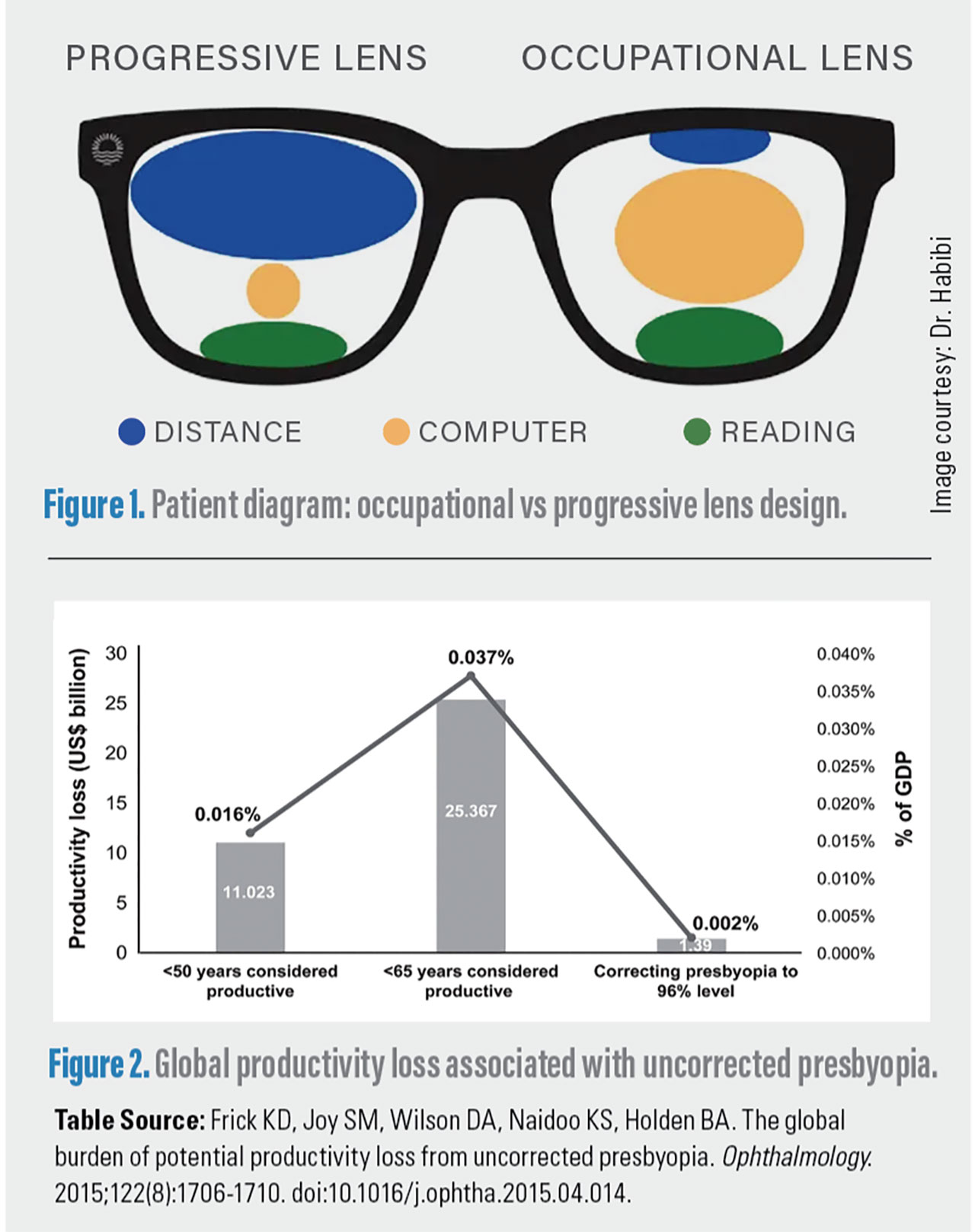
The need for these near-variable focus lenses, or computer progressives has never been greater. The reasons: 65% of presbyopes report symptoms of digital eye strain (DES), and 40% feel fatigued at least half of the time during work.2 Additionally, occupational lenses reduce the accommodative burden, improve comfort, and support sustained productivity the same way any ergonomic purchase would. Therefore, for any presbyopic patient who spends more than 2 hours using digital devices or reporting DES symptoms, discussing occupational lenses should be as routine as checking for cataracts or prescribing -1.00 D glasses for myopia. In fact, not mentioning them is doing them a disservice.
How
I have found the following 3 ways particularly effective in getting my presbyopic patients to recognize the importance of occupational lenses:
1. Integrating related questions into the patient history form. These 2 questions equip me to broach the subject: “How long are you on screens each day?” “Do your current progressive lenses give you clear, comfortable vision throughout the day?”
2. Reviewing their daily tasks. Doing so helps me understand whether they move around frequently, how many screens they use, and whether they want to see across the room or out a window while working. From this, we decide on their near demand—whether geared toward multi-monitor setups, for laptop-plus-phone use, or for mixed visual environments—and help them imagine how this option could improve their daily efficiency.
3. Using a diagram. I like to keep the conversation simple by showing a spectacle lens diagram and saying, “These are built for your workspace and match the visual posture of your workday.”
One of my patients, a 57-year-old psychologist, explained to me how occupational lenses have changed her life:
“As someone who works entirely online, I spend 8-10 hours a day on multiple screens. I didn’t think I needed ‘special’ computer glasses until I tried occupational lenses. I was hesitant to add another expense, but wow…game changer. My workdays feel easier, my eyes don’t feel drained, and my focus is easy with every session. These lenses have been a full-on life upgrade. I’ll never go back.”
An Untapped Opportunity
As optometrists, we have an untapped opportunity to provide a solution that will improve comfort, reduce fatigue, and align perfectly with how our presbyopic patients see in their digital environments. Let’s watch our patients’ lives (and optical revenue) get noticeably better. OM
References
1. Bellis, J. Coffee consumption statistics US (charts & infographics). Balance Coffee. October 12, 2025. Accessed October 27, 2025. https://balancecoffee.co.uk/blogs/blog/coffee-consumption-statistics-us
2. ASCO. Our eyes weren’t made for screens. Eye on Education. December 2017. Accessed October 27, 2025. https://eye.opted.org/4252
3. Frick KD, Joy SM, Wilson DA, Naidoo KS, Holden BA. The global burden of potential productivity loss from uncorrected presbyopia. Ophthalmology. 2015;122(8):1706-1710. doi:10.1016/j.ophtha.2015.04.014