


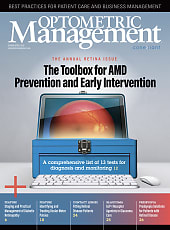
Supplying ocular nutritional supplements (ONS) is a way to deepen patient trust and improve their visual outcomes, with the byproduct a new revenue stream. This is the theme of this issue of Optometric Management.
Also, due to an increase in the prevalence of age-related macular degeneration and dry eye disease, this preventive intervention is needed.1

Other facts to consider: the global eye health sup-plements market size was estimated at $1.95 billion in 2024. It is projected to reach $2.94 billion by 2030, increasing at a compound annual growth rate of 7.1% from 2025 to 2030.1 Additionally, the United States is the largest market for eye health supplements.1
Optometry holds a unique position—rooted in evidence and supported by growing research—that allows ODs to confidently guide patients to the right ONS, using science-based recommendations in this area. So, how can optometrists successfully supply ONS to their patients? As someone who has accomplished this, here are my recommendations.
1. Know Your Stuff
ODs need to understand the basic mechanisms of action, absorption factors, and quality standards of ONS to supply them to patients successfully. I have found that the following resources can help here:
- National Institutes of Health: https://ods.od.nih.gov
- NatMed: https://naturalmedicines.therapeuticresearch.com/Home/ND
- ConsumerLab.com: https://consumerlab.com/
- NSF: https://www.nsf.org/
- Oregon State Micronutrient Information Center: https://lpi.oregonstate.edu/mic
For example, fat-soluble nutrients, such as vitamins A, D, E, K, and lutein require dietary fat for optimal absorption—yet this important detail is often missed in patient instructions. Similarly, many patients are unaware that oxidation or improper storage can degrade fish oils, among other sensitive compounds. Sharing these insights transforms a recommendation into education and helps sustain long-term patient adherence, as well as maximum ONS bio absorption. Also, as is the case with contact lens prescribing, optometrists and their staff must continuously update their knowledge of ONS product lines to ensure they are recommending the most appropriate ingredients. (See the bulleted list of resources above.)
Finally, ODs should be sure to involve their staff in acquiring this education as well. The reason: I have found that when staff can confidently reinforce my recommendations, patient adoption naturally rises.

2. Determine Your Purchase Model
Some practices opt for supplying ONS in their optical, maintaining a small, curated in-office inventory of 3-5 high-quality options, meaning products that meet rigorous standards for purity, potency, safety, and label transparency. Others rely exclusively on online fulfillment platforms that ship directly to patients.
I have found that a hybrid model offering a short-term “starter pack” (eg, a small supply of the recommended ONS) in-office, then an online fulfillment platform often yields the best balance of patient convenience, which can equate to adherence, and workflow efficiency. Cloud-based platforms, in particular, enable direct patient ordering, automated refills, and tracking—all while maintaining clinical oversight and reducing staff time.
That said, the ideal purchase model is the 1 that supports patient follow-through, while integrating smoothly into the practice’s existing operations. Optometrists who have limited staff or space—or those practices already equipped with digital and website capabilities—may prefer online fulfillment for automation and ease. Those ODs who have storage space and want patients to start on an ONS immediately may want to keep a small in-office supply.
3. Inquire About Current Use
In the patient intake form, optometrists should include a dedicated section for “supplements, herbals, or nutraceuticals,” that is separate from “current/past medications.” I have found that, that signals to patients that an assessment of these items matters, making them amenable to a related discussion.
4. Ask About Diet
I suggest ODs consider adding 1 or 2 questions about dietary habits to the patient-intake form as a means of identifying patients who could potentially benefit from ONS. Example questions: How many servings of green leafy vegetables (such as spinach or kale) do you eat daily? How often do you consume salmon, sardines, walnuts, or flaxseed? How many times a week do you regularly eat processed or fast foods? The answers to these questions also enable the knowledgeable OD to tailor an ONS.
For example, I recently treated a patient who con-sumed inadequate amounts of fish and, therefore, had a low intake of omegas. Also, her intake of leafy greens was twice a week. Therefore, I recommended a targeted supplement to support her ocular needs and I outlined simple ways to increase her daily intake of nutrient-rich greens, creating a balanced approach to supporting her eye health through both nutrition and supplementation.
To make patient communication efficient, I suggest optometrists use a pre-written punch list—a simple, standardized form of their most frequently recommended ONS. This step also enables staff to process orders accurately, which increases workflow productivity, while reassuring the patient that everyone in the practice is aligned with their care.
5. Schedule Review Visits
Optometrists should schedule review visits—I typically have patients return 2-4 weeks—after the recommended ONS—to assess the patient’s adherence to the recommendation. Additionally, follow-up visits reemphasize to patients the importance of the ONS recommendation.
Further, I suggest ODs combine in-office testing—such as carotenoid density or other ocular metrics—with serum or direct-to-consumer lab evaluations, like vitamin D or omega levels. My reasoning: These objective data points provide measurable feedback that validates the optometrist’s recommendations, motivates patients, and demonstrates that their approach is truly personalized.
Educators and Advocates
By weaving ONS into the care we provide, we evolve from prescribers to educators and advocates for lifelong wellness. For ODs uncertain about incorporating ONS into their practice, I suggest asking patients, “would you be interested in receiving nutritional supplement guidance for your eyes and overall health?” for 2 weeks and gauging interest. OM
Reference
- Grand View Research. Eye Health Supplements Market (2025 - 2030) Size, Share & Trends Analysis Report By Ingredient Type (Lutein & Zeaxanthin, Antioxidants), By Indication (AMD, Cataract), By Formulation, By Region, And Segment Forecasts https://www.grandviewresearch.com/industry-analysis/eye-health-supplements-market (Accessed November 20, 2025)
