



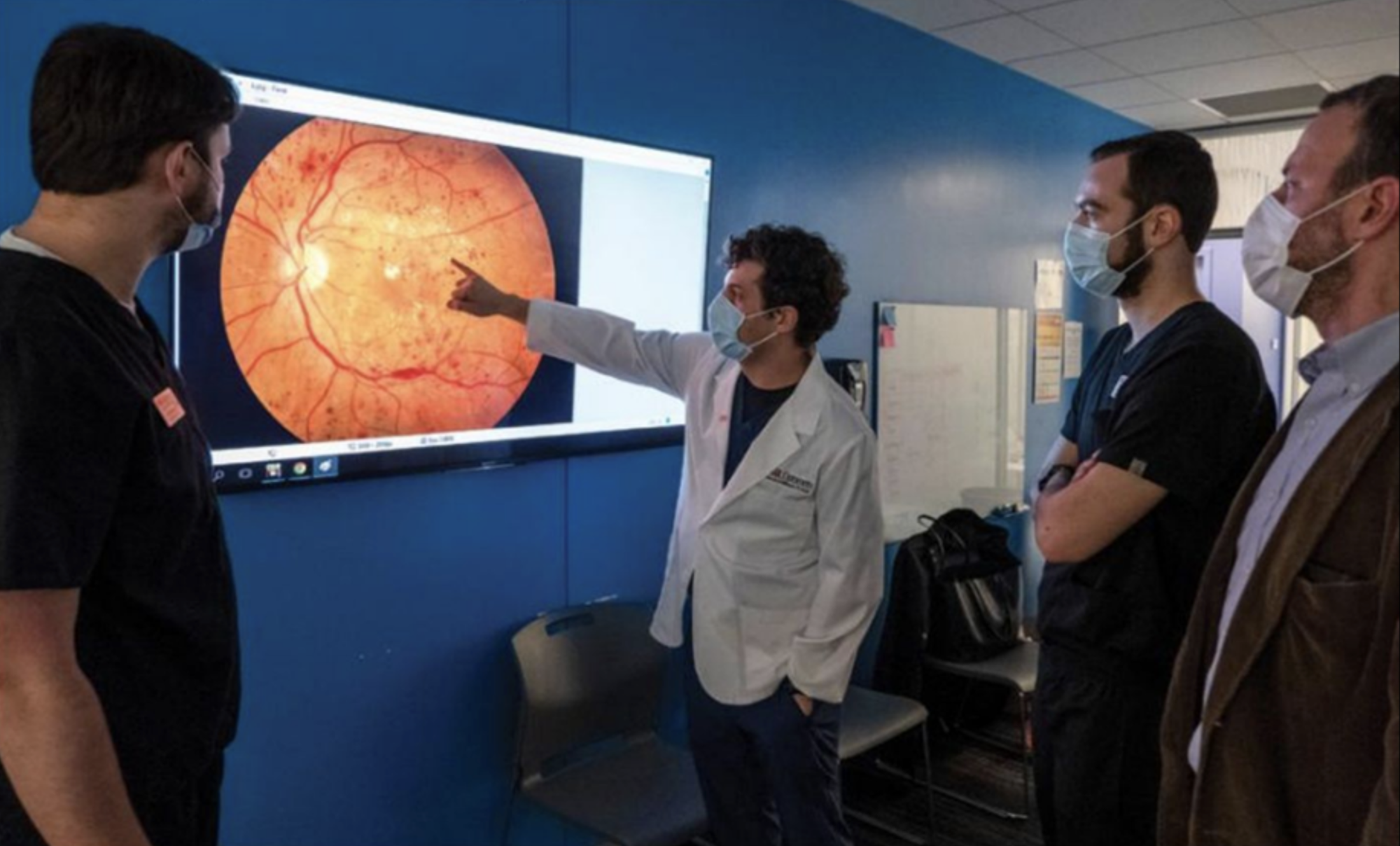
In his presentation at Optometry's Meeting 2026 in Phoenix, Tareq Issam Nabhan, OD, FACU, FVI, (president, St. Louis Optometric Society, and Associate Clinical Professor, College of Optometry, University of Missouri - St. Louis [UMSL]), discussed teleretina adoption in primary care settings along with how artificial intelligence (AI) has evolved to situate itself within the TR framework.
Dr. Nabhan opened the discussion by introducing a section of the AMA's telehealth playbook on new service deliveries. This includes needs assessments, forming teams, defining success, and evaluating vendors, all while having a clinician involved from A to Z.
Dr. Nabhan pointed out that “we are all using AI, whether we recognize it or not. It’s everywhere.”
As such, he stressed the importance of embracing the latest innovations in technology while also being responsible in how they are used. “Optometry must be involved in leveraging emerging technologies in caring for patients,” he said. “Doing so has allowed us to scale our care and expand our scopes. However, as advocates for our patients, we are not immune to this responsibility as it relates to AI.”
He added that as clinicians, it is important to be aware of AI bias and AI addiction, and how end-user large language models such as ChatGPT are being used by patients for medical guidance as well as second opinions.
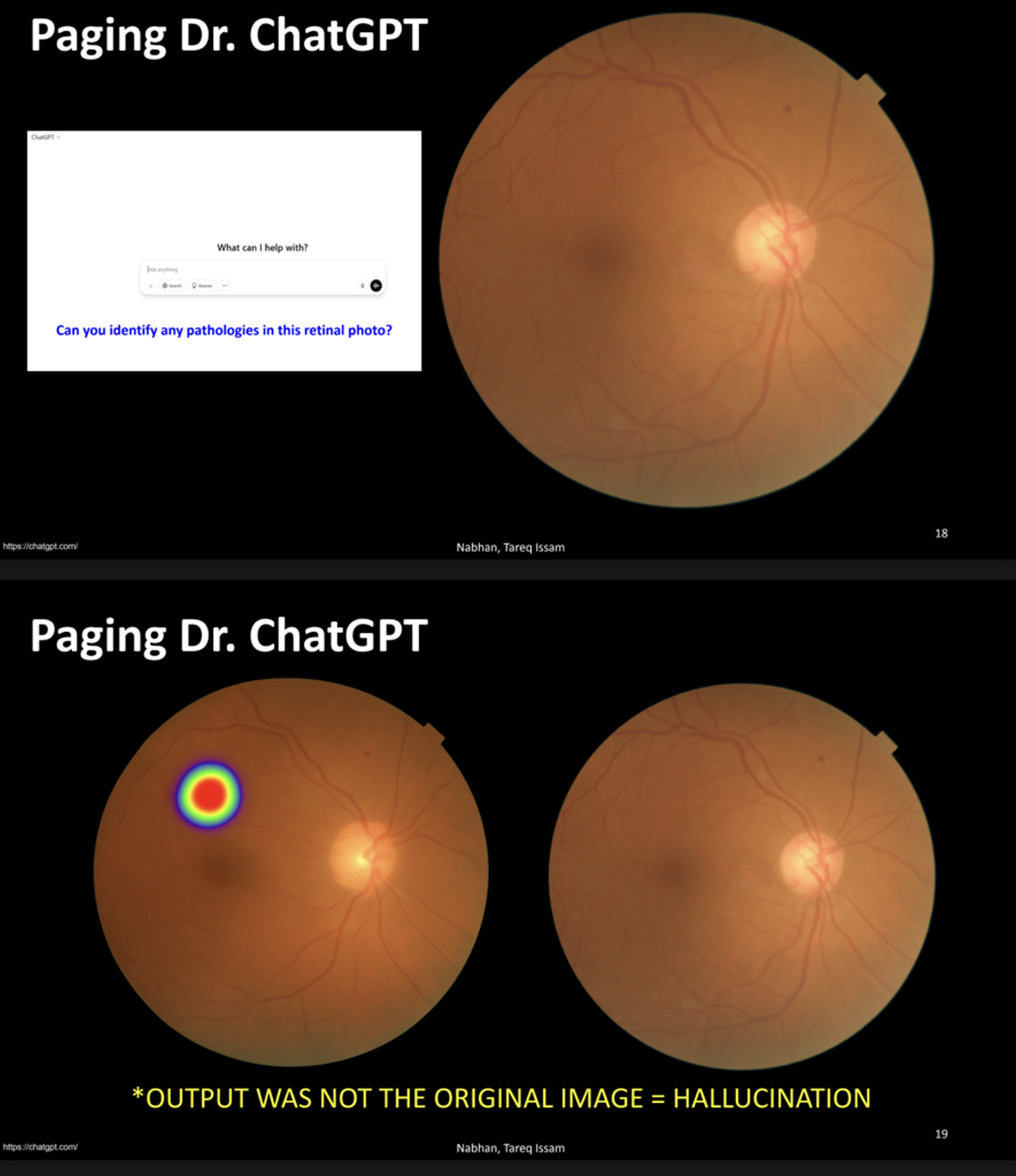
"We want to work upstream and be able to have evidence-backed conversations with our patients about what AI solutions can and can't do,” Dr. Nabhan explained. “By doing so, we demonstrate our advocacy. We're showing our patients that we're keeping up with the evolution of health care while keeping them at the center of the experience.”
Dr. Nabhan then discussed ways to leverage teleretina and highlighted how it has been used successfully at Veterans Affairs (VA), Indian Health Service (IHS), and NASA. “Part of a culture change that I feel is required in order for optometry to be more flexible with teleretina is to see how it has made a difference for more than 2 decades in each of those agencies,” he explained.
Dr. Nabhan continued, “if you have all of this teleretina being delivered, what would it look like to have teleretina with an immediate readout? Human-operated turnaround times are usually days or even weeks for image reading/reporting. That's where AI will scale as an end-user solution to the person that uses the instrument. Robust frameworks of teleretina services at VAs and IHSs have essentially laid the foundation for AI adoption. More and more agencies are looking at leveraging autonomous solutions, but not all actors are the same.”
Dr. Nabhan also noted that AI solutions in eye care are not limited to or focused on those in the private practice space. “I think AI's impact at scale will not be in the private practice setting, but at the national level—from hospitals, VAs, IHSs, community health centers, and medical schools,” he said, adding that he expects to continue to see patients in his office that have had a plethora of medical images fed into sophisticated machine learning algorithms for the purpose of oculomics.
“So I don't want to be thinking only about an EHR that scribes. I want to be thinking about what this person in my chair may have already had done if they were at any hospital system,” he said. “These consequences will begin to trickle down, since the lion’s share of AI in eye care with respect to ophthalmic and systemic diagnoses, along with morbidity and mortality risks, may have already occurred by the time we are seeing patients.”
Dr. Nabhan also highlighted several portable AI solutions for the autonomous detection of diabetic retinopathy. For example, Digital Diagnostics’ LumineticsCore (formerly known as IDx-DR), the first FDA De Novo-cleared AI diagnostic system, can autonomously diagnose diabetic retinopathy in people living with diabetes. He also highlighted other technologies for glaucomatous optic neuropathy, as well as the oculomics of identifying age, the sex of an individual, and understanding morbidity and mortality risk. “These are very sophisticated solutions that have these capabilities to identify age plus or minus 2 and a half years. Imagine what it can do with diabetes!” OM
Dr. Nabhan reports no relevant financial disclosures.