



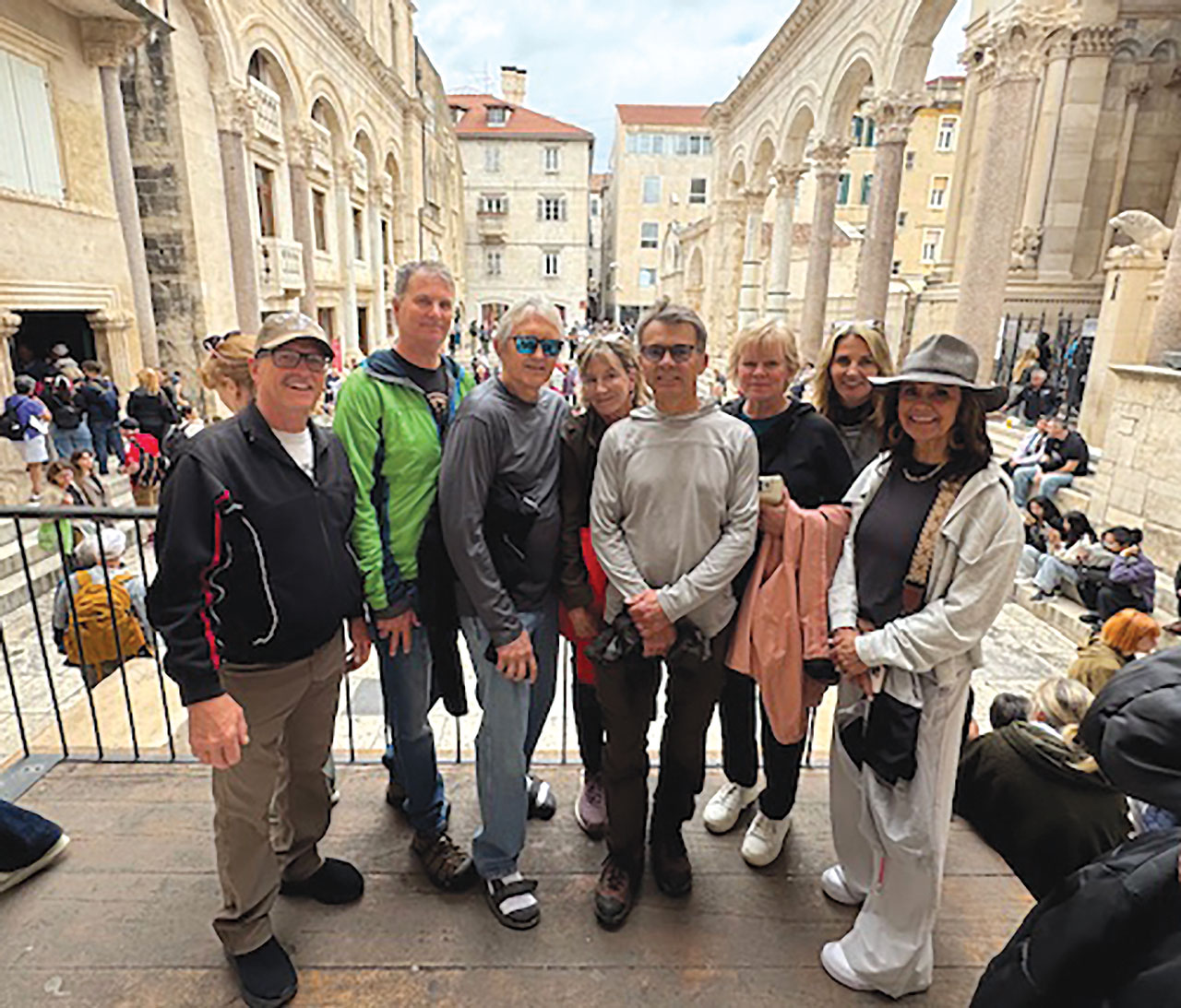
Last fall, my husband and I and friends spent 2 weeks in Croatia. We toured the wine country. We stayed in medieval fortresses. We visited 1 of the country’s national parks. We journeyed through eerily quiet communities of buildings bombed during World War II. We boarded a 50-foot catamaran to sail and bike their more than 1,200 islands. We visited towns dating back to BC 300 and palaces from AD 300.
I once read a quote from leadership expert John Maxwell that resonated with me: “If you want to grow as a leader, be prepared to be uncomfortable. But know this: the risks are well worth the rewards!” I cannot think of anything more out of one’s comfort zone than traveling internationally.
Understanding/Respecting Other Perspectives
Traveling internationally reinforces the importance of seeking to understand and respect other perspectives. In Croatia, we learned that not sitting for at least 1 hour when drinking coffee at a restaurant is considered rude. Additionally, we learned from a tour guide that “Pomalo,” a Croatian word, means “slowly,” “take it easy,” or “no rush.” The word is a reminder to appreciate every moment. Next time, I’ll think twice when I become impatient with staff, patients, or even my kids.
Fostering Empathy
In talking to our 3 male catamaran guides, we learned they spend months away from their families and friends to host and guide visitors around their country. When we asked them about their plans once their guiding season was over, they lit up with excitement and anticipation telling us they would be spending time with their families. One of the guides mentioned he was looking forward to taking care of his toddler son. Can you imagine being away from your family and friends for months? Taking the time to get to know our staff members and patients enables us to empathize with their situations. This can translate to trust, stronger communication and relationships.
Prompting Resilience
Traveling internationally also prompts resiliency, in that you are often forced to be flexible with and/or adapt to certain situations. Examples include delayed or canceled flights, lost luggage, and finding adaptors for electrical appliances to function correctly. When you are a leader, staff and patients look to you for how to best handle challenging circumstances. Being prepared to pivot when necessary to solve 1 or more problems is a leadership style that inspires others to follow suit. A classic example is staffing schedules. Sometimes, we need to be flexible to accommodate what life throws at us.
Better All Around
International travel makes you a better human, and that’s the foundation of outstanding leadership. I challenge you to depart from your comfort zone and travel. Listen. Enjoy. Ponder. Understand. Absorb. Practice “Pomalo.” OM